Introduction
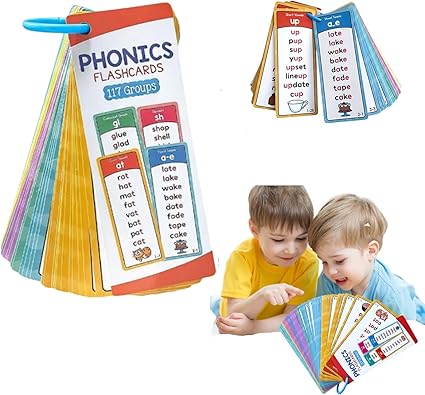
Imagine a world where learning to read is no longer tedious, but an engaging adventure for your little one. With Winnsell’s Phonics Flash Cards, that dream becomes a reality. These cards are not just a stack of paper, but little nuggets of knowledge that guide your child through the essentials of phonetic patterns in English. Whether your child's learning journey is just beginning or they're brushing up on known skills, these cards provide an interactive and fun educational experience. Backed by vibrant colors and family rhyme word lists, you're looking at a resource that turns learning into an enjoyable quest.
Pros & Cons
- Pros:
- Color-coded Design: Eye-catching colors that maintain children’s attention and enhance engagement.
- Comprehensive Coverage: 117 phonetic family rhyme word lists covering short and long vowels, blends, and more.
- Portable and Organized: Includes punched holes and rings for easy organization and travel.
- Interactive and Playful: Designed to be educational yet fun, supporting reading, spelling, and phonics skills.
-
Versatile Use: Perfect for at-home learning, classroom environments, or on-the-go education.
-
Cons:
- Might require adult supervision initially to guide young children.
- The included rings may not fit well if the number of cards increases.
Comparison
While other brands like "School Zone Big Flash Cards" focus primarily on individual sight words, Winnsell’s Phonics Flash Cards bring a broader, more interactive approach. They not only reinforce existing vocabulary but introduce new phonetic patterns. Compared to "Munchkin Wild Sling," which offers limited thematic learning, Winnsell appeals to a broader age range with comprehensive educational objectives, making it a more versatile option.
User Tips / Usage Guide
-
Start Slow: Introduce a few cards at a time to avoid overwhelming your child. Start with simple short vowels and gradually move towards more complex patterns.
-
Interactive Play: Incorporate the cards into daily activities. For example, you might ask your child to find items in the house that start with the sounds on the card.
-
Engage Through Games: Make use of the colorful, fun design by creating games such as matching cards with objects, or rhyming games.
-
Consistent Practice: Allocate a set time each day for using the cards. Consistency builds muscle memory in the brain and aids in retention of information.
-
Encourage Storytelling: Have your child create stories using words they've learned from the cards. Not only does this enhance vocabulary, but it stimulates creativity.
-
Incorporate Technology: Use educational apps alongside these flashcards as supplementary tools. Videos or phonetic apps can bring an audio-visual element to reinforce learning.
-
Parental Involvement: Regularly check progress. Engaging with your child during their learning process encourages them to perform better and boosts their confidence.
Conclusion
As a lifestyle blogger who balances being a parent and a teacher effortlessly, finding the right tools to support my child's development is crucial. After a week of daily use, Winnsell’s Phonics Flash Cards have proven to be a cherished staple in our learning repertoire. They seamlessly blend education with play, making each session something my child looks forward to. Whether you're an educator seeking to expand your classroom toolkit or a parent longing to make learning more delightful and impactful at home, these flashcards are worth investing in. Empower your child’s educational journey with these vibrant, engaging tools — they won't just learn; they'll thrive!