Introduction
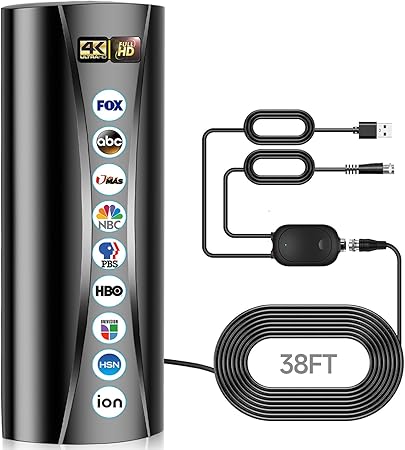
Cutting the cord has become increasingly attractive as cable bills continue to rise, pushing many consumers towards alternatives like digital antennas. The Tegnat HD Digital Antenna promises to be a solution by offering a reported 3700+ miles range and 360-degree reception for both indoor and outdoor use. This review examines whether the Tegnat antenna delivers on its promises and evaluates its real-world performance.
Pros & Cons
- Pros:
- Extensive range for capturing signals from distant stations
- 360-degree reception minimizes the need for constant repositioning
- Simple installation process suitable for beginners
- Supports HDTV, providing clear image quality
-
Compact and lightweight design
-
Cons:
- Mileage range claim can be misleading and varies based on location
- Performance significantly decreases in bad weather
- Requires additional amplifier for best results in some areas
- Limited mounting hardware included
Comparison
When compared to more established brands like the Mohu Leaf or the Winegard FlatWave, the Tegnat antenna attempts to set itself apart primarily through its ambitious range claim. While the Tegnat advertises a 3700+ miles range, it's important to acknowledge that this is practically implausible and mostly a marketing play. In essence, its effective range is comparable to these competitors, especially when combined with an amplifier, but it does offer decent value due to its lower price point. Both the Mohu and Winegard options might offer a more reliable reception in areas with challenging signal conditions.
User Tips / Usage Guide
- Position Strategically: Place the antenna on an external wall facing towards the general direction of the broadcast towers to enhance reception.
- Elevation Matters: Mount the antenna as high as possible on the roof or in the attic for clearer signals.
- Amplifier Need: Consider purchasing an additional amplifier if you are located far from broadcast towers.
- Scan Regularly: Perform a channel scan periodically to ensure you're receiving the most channels available.
- Weather Precaution: If installed outdoors, secure the antenna firmly to withstand adverse weather conditions.
- Indoor Optimization: Use a window or a higher point in the room to test for the best indoor reception.
- Cable Quality: Ensure the coaxial cable connecting to your TV is of good quality to prevent signal loss.
- Directional Adjustments: Experiment with minor adjustments to the antenna direction to capture additional channels.
Conclusion
The Tegnat HD Digital Antenna is best suited for cord-cutters living in regions with moderate to strong broadcast signals. Its claim of a 3700+ miles range should be taken with a grain of salt, but for those within urban centers or not too far from transmission towers, it can serve as a cost-effective way to access free over-the-air television. Those in very remote areas may need additional equipment to see optimal results, suggesting that more established brand options could be worth considering for users in such conditions.