Introduction
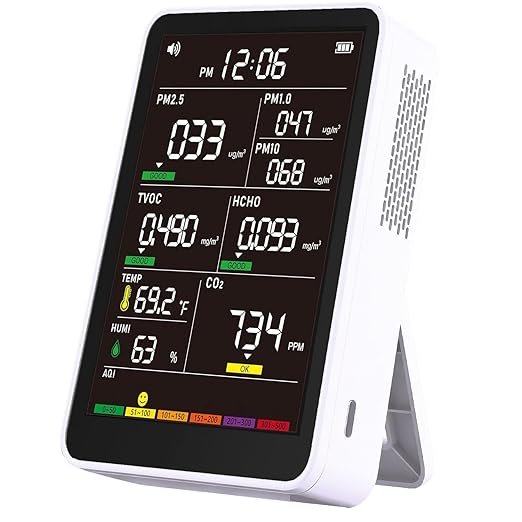
An indoor air quality monitor is essential for many households today. With increasing concerns over air pollution and its health effects, having a device that provides real-time feedback on the air you breathe can be invaluable. Whether you want to ensure a safe environment for your family, improve the air quality around your plants, or protect your pets from harmful airborne particles, a reliable monitor can help you take the necessary steps to a healthier living space.
Pros & Cons
Pros:
- Real-Time Monitoring: Offers immediate insights into air quality, enabling swift action if needed.
- Portability: Compact and lightweight, making it easy to move between rooms or even use in a car.
- Easy to Use: Simple interface with a clear, color display that shows key metrics.
- Versatile Usage: Suitable for various environments, including homes, cars, and even outdoor spaces.
Cons:
- Battery Life: Limited battery life may require frequent recharging, especially with continuous use.
- Price Point: Slightly higher than some basic models, potentially excluding budget-conscious buyers.
- Accuracy Variability: Some users report fluctuations in readings, which could affect long-term reliability.
Comparison
When compared to similar products like the Temtop M10 Air Quality Monitor or the Airthings Wave Mini, this professional indoor air quality monitor stands out for its real-time data display and ease of use. The Temtop M10 provides similar features but lacks the color display, which can make it harder to quickly interpret data. The Airthings Wave Mini offers smart home integration, which this model does not, but it comes at a higher price and less portability. Overall, this monitor strikes a balance between price, features, and usability, making it a compelling option for those who do not require smart connectivity.
User Tips / Usage Guide
- Calibration: Allow the device to calibrate in a clean environment before first use for accurate readings.
- Placement: Position the monitor at breathing level to get the most representative air quality data.
- Regular Charging: Keep the device charged to avoid interruptions in data reporting.
- Outdoor Resetting: Occasionally test the device outdoors in a clean environment to recalibrate its baseline.
- Away Mode: Use the device in your car occasionally to check for CO2 levels and other pollutants.
- Maintenance: Clean the sensor area with a dry cloth to maintain sensitive readings.
- Data Logging: Note readings over a period for patterns and potential air quality improvement measures.
Conclusion
This Professional Indoor Air Quality Monitor is an excellent choice for individuals who want to take proactive measures regarding air quality. Its real-time monitoring, portability, and user-friendly interface make it ideal for home users concerned about the health implications of pollutants. Families, plant enthusiasts, and pet owners seeking to create a safer and more comfortable living environment will find this monitor particularly beneficial. However, those on a tight budget or needing more advanced smart integrations might consider alternative options.