Introduction
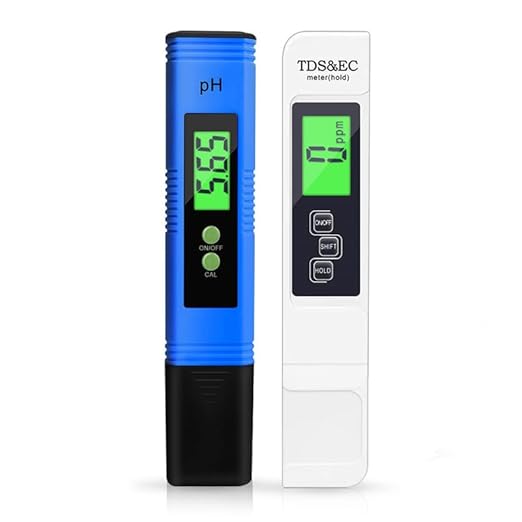
In today's world, ensuring the quality of water is crucial for health and maintenance tasks across various settings. Whether managing a swimming pool, an aquarium, or just monitoring household water purity, precision pH meters can save time and prevent errors involved in maintaining optimal water conditions. The PH Meter 4-in-1 Digital Tester offers a convenient solution by providing quick readings on pH levels, total dissolved solids (TDS), electrical conductivity (EC), and temperature.
Pros & Cons
Pros
- High Precision: Offers ±0.01 pH accuracy, which is suitable for various applications needing reliable data.
- Versatility: Measures four different parameters, making it a useful tool for multiple environments.
- Readability: Comes with a backlit LCD screen ensuring the data is easy to read even in dim environments.
- Ease of Use: Straightforward operation with one-button calibration and reading process.
- Compact Design: Its portable nature makes it easy to carry and use anywhere.
Cons
- Battery Life: Regular usage might require frequent battery changes.
- Build Quality: The lightweight build may feel less durable.
- Calibration Frequency: Requires frequent recalibration to maintain accuracy.
Comparison
When comparing the PH Meter 4-in-1 to other similar products, it competes well against higher-end models like the Apera Instruments AI209 pH20, known for superior build but at a higher cost. The budget-friendly Dr.meter pH100 and similar models offer lower accuracy and fewer features, lacking the 4-in-1 functionality. Thus, the PH Meter 4-in-1 Digital Tester strikes a balance between cost and comprehensive features making it more versatile than basic single-function testers.
User Tips / Usage Guide
- Initial Calibration: Calibrate the pH meter using standard buffer solutions before the first usage to ensure accuracy.
- Regular Calibration: Recalibrate regularly, especially if it's being used in different types of water.
- Careful Handling: While the device is portable, handle it with care to prevent any physical or water damage.
- Clean the Electrode: Rinse the electrode with distilled water after each use to prolong its lifespan.
- Avoid Prolonged Storage: Store the device in a dry place and avoid extended periods without use to prevent degradation of the electrodes.
- Follow Guidelines: Always follow the manufacturer's guidelines for using and maintaining the meter.
- Use Fresh Batteries: Keep spare batteries on hand; replace them promptly when readings become sluggish or inconsistent.
Conclusion
The PH Meter 4-in-1 Digital Tester stands out as an excellent option for anyone who needs an affordable yet reliable water quality tester. Its usability and breadth of features make it particularly valuable for homeowners, aquarium enthusiasts, and those in the hospitality industry. While it may lack some build durability and requires frequent calibration, its overall functionality and ease of transport make it an indispensable tool for practical and quick assessments of water conditions.