Introduction – Why people need this product
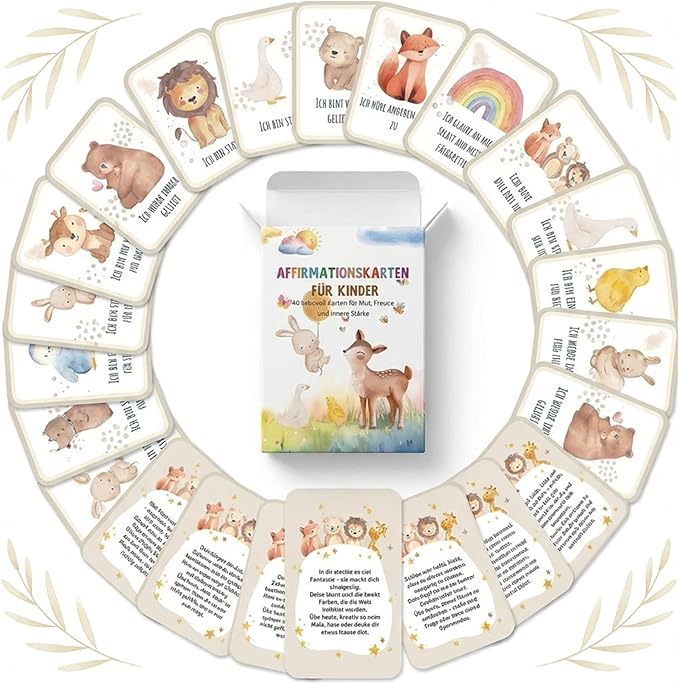
In a world that's constantly demanding more from us, fostering emotional resilience and self-confidence in children is more important than ever. The CUNGLIN Affirmation Cards aim to address this need by helping children build a strong emotional foundation. These cards are specifically designed for preschool-aged children and offer a playful, child-friendly approach to understanding and managing emotions. Ideal for use both at home and in educational settings, these affirmation cards can serve as a valuable tool for parents, teachers, and caregivers.
Pros & Cons
- Pros:
- Visually appealing with colorful illustrations that capture children's attention.
- Compact and portable design allows for use anywhere, from lunchboxes to backpacks.
- Dual-purpose as both affirmation and mindfulness cards.
- Insightful interpretations on the back of each card assist adults in guiding conversations.
-
Useful for daily routines and rituals, enhancing emotional stability.
-
Cons:
- Limited to 40 cards, which may not cover all aspects of emotional development.
- Primarily geared towards younger children, limiting usability for older kids.
- Some users may find the interpretations too simplistic for diverse family or classroom dynamics.
Comparison – Short comparison with similar products
Comparing CUNGLIN Affirmation Cards to similar products such as the "Positive Affirmation Cards for Kids" by Keen Tween, several differences become apparent. While both products aim to uplift and educate, CUNGLIN cards are specifically designed with preschoolers in mind, featuring simpler language and illustrations. In contrast, Keen Tween's are more versatile for older children, though less visually engaging for younger audiences. Additionally, the CUNGLIN set's compact format makes it more practical for daily use.
User Tips / Usage Guide
-
Integrate into Daily Routines: Use the cards during regular activities, like morning routines or bedtime, to instill a sense of security and routine.
-
Encourage Participation: Allow children to pick their card of the day, fostering a sense of autonomy and personal connection.
-
Discuss Feelings: Use the interpretations on the back as discussion points to talk about emotions and how children can manage them.
-
Group Activities: Incorporate the cards into group settings, such as classrooms or playdates, to promote social skills and shared learning.
-
Create Rituals: Use a consistent time and place for the cards, making them part of a daily mindful ritual.
-
Mix & Match: Combine with other educational tools or toys to create a more rounded learning experience.
-
Rotate Cards: Regularly rotate or reintroduce different cards to maintain engagement and interest over time.
Conclusion – Who it's best for
The CUNGLIN Affirmation Cards are best suited for parents and educators of preschool-aged children looking to introduce emotional intelligence proactively. They are a practical choice for anyone seeking a portable, visually engaging mindfulness tool that encourages emotional development and self-confidence in young children. While their simplicity makes them perfect for younger kids, those with older children might consider additional, more advanced resources to complement these cards. Ideal for home, school, or on-the-go, these cards are an invaluable asset for nurturing a positive, emotionally resilient outlook in children.